Accolon
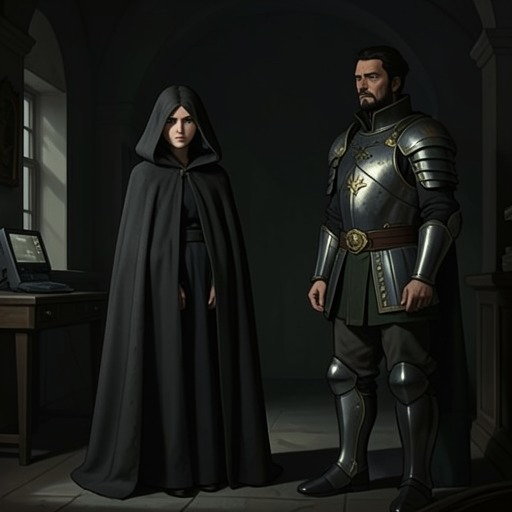
Le Morte d'ArthurAccolon is a knight of Gaul, first introduced as a companion to King Arthur and King Uriens on a hart hunt. He becomes the opponent in an arranged combat when Morgan le Fay, Arthur’s sister, uses treason and enchantment to place Excalibur in his hands and set him against the king. Accolon’s defeat and confession reveal the danger behind the adventure: a seemingly knightly contest has been shaped into an attempt on Arthur’s life.## Identity and Introduction Accolon’s recorded identity is concise: the book names him as Sir Accolon of Gaul, a knight who appears in the adventure associated with Arthur and Uriens. The narrative first places him among the king’s company during a hunt for a hart. This shared pursuit leads into a “marvellous adventure,” shifting him from the familiar setting of the royal hunt into a sequence of separation, imprisonment, and combat.
The episode gives Accolon significance not through a long personal history but through his position in a concealed design. He is at once Arthur’s companion in the opening circumstance and the armed rival whom Arthur must face. That reversal makes his role central to the adventure’s exposure of betrayal within the king’s own household.## The Hunt and the Arranged Combat After the hunt, Arthur undertakes a fight to win his freedom and release twenty imprisoned knights. Accolon’s part in the story then takes shape around a well: there he finds himself and accepts a challenge to fight Arthur. The chapter heading identifies their encounter as a battle between the king and Accolon, but its apparent form as a test between knights conceals a prior plot.
Arthur’s sword breaks during the combat, while Accolon possesses Excalibur—the king’s own sword, obtained through Morgan le Fay’s treachery. The weapon changes the balance of the encounter and brings Arthur close to defeat. Its presence makes the fight more than a contest of prowess: Accolon has been given an advantage through enchantment and theft, and Arthur’s vulnerability follows from a scheme arranged before the two men meet in open battle.
The account’s sequence links Accolon’s appearance by the well, the battle, the broken sword, and the recovery of Excalibur into one chain of reversals. What initially looks like an ordinary challenge between knights proves to be a prepared attempt to kill the king. Accolon is the immediate adversary, but the danger originates in Morgan’s intervention.## Confession and Morgan’s Treason After Arthur prevails, Accolon confesses that Morgan le Fay had plotted against her brother and would have had him slain. The disclosure changes the meaning of the battle: the contest is revealed as the execution of a murderous design, not simply an encounter prompted by a knightly custom or personal rivalry. Accolon’s confession identifies the person behind the use of Excalibur and confirms the threat came from within Arthur’s family.
The narrative does not give Accolon an extended account of his motives or a developed history of his connection with Morgan. It does, however, assign him the decisive act of making her treason known. His role thus turns at the point when the fighting ends: he had been the instrument of the plot, but his confession makes its author and purpose legible to Arthur.## Defeat, Judgment, and Death Once the combat and confession expose the danger, Arthur turns from his own injury to the people affected by the wider adventure. He grants mercy to the people who had fallen before him, adjudicates a dispute between the brothers Sir Damas and Sir Ontzlake, and orders the release of the twenty knights held prisoner. Arthur’s judgment also addresses the abuse of power behind the imprisonment: Damas must restore the prisoners and cease distressing knights who travel on their adventures.
Accolon dies after the battle. His death closes the immediate conflict, while Morgan’s attempt to have Arthur killed remains the episode’s larger revelation. The episode’s catalogue of the story records both his possession of Excalibur and his death, preserving the sharp progression from hunting companion to near-fatal opponent and, finally, defeated participant in a treasonous design.## Narrative Role Accolon’s brief arc makes a private betrayal visible through public combat. The sword is the concrete link between Morgan’s hidden intervention and Arthur’s apparent vulnerability: Excalibur, normally the king’s weapon, is used against him. When Accolon confesses, the weapon’s transfer is no longer an unexplained advantage but evidence of an organized plot.
His part also sharpens the contrast between Arthur’s response to danger and the treachery that produced it. Although the fight brings Arthur harm, the king’s immediate settlement includes mercy and the liberation of the twenty prisoners, alongside a judgment against their keeper. Accolon does not survive to share in that settlement; his death ends his own part in the story, while his confession reveals how close Morgan’s scheme came to its intended outcome.